Product Comparison · Parking-Mode Cameras
Dash Cam Battery Pack vs Hardwire Kit: Which Parking-Mode Power Source Fits How You Drive?
Battery pack or hardwire kit for dash cam parking mode? We break down runtime, install effort, starter-battery risk, and heat, then match each power source to street parkers, garage parkers, rideshare drivers, and fleets.
Parking mode is the feature that earns a dash cam its keep. Hit-and-runs, door dings, and break-ins overwhelmingly happen while you are nowhere near the car, and a camera that shuts off with the ignition sees none of it. The camera is the easy purchase; the hard question is how to feed it power for hours with the engine off. You have two realistic answers: a dedicated battery pack that charges while you drive and runs the camera from its own cells, or a hardwire kit that taps your fuse box and draws from the starter battery behind a low-voltage cutoff. Both work, they fail in different ways, and each fits a different parking life — street parker, garage parker, rideshare driver, or fleet.
The short answer
If you park in a garage or driveway, drive most days, and your battery is healthy, buy a hardwire kit: about $30, under an hour to install, effectively unlimited coverage with a cutoff protecting the starter battery.
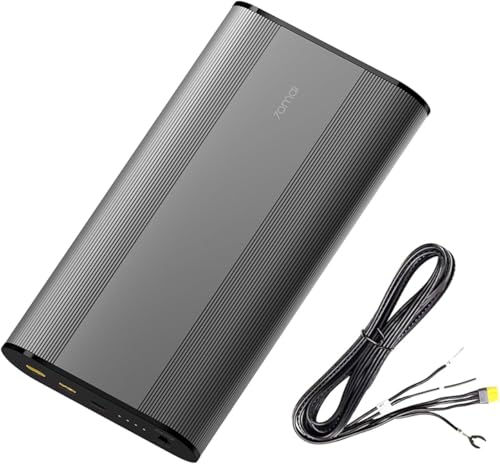
If you street park overnight where incidents are a real concern, take mostly short trips, or drive a car with an older or marginal battery, a dedicated pack like the 70mai BL96NNX battery pack (about $220) is the better tool: it isolates the camera's draw completely, at the cost of finite runtime and a bigger up-front spend. Rideshare drivers and fleets should default to hardwiring. Now the details, because the edge cases are where people buy the wrong thing.
Why parking mode needs its own power plan
A modern dash cam draws roughly 2 to 6 watts depending on channel count, resolution, and whether it records continuously (buffered) or snaps frames (time-lapse). While driving that is trivial; parked, it adds up. A typical 12V starter battery stores around 500 to 700 watt-hours on paper, but only a slice is safely usable — lead-acid degrades quickly when deeply discharged, and you still need enough charge to crank the engine. That is why every reputable hardwire kit includes a low-voltage cutoff: when the battery sags to a threshold you select (commonly around 11.8V to 12.4V), the kit kills power to the camera.
Two consequences follow. First, real-world coverage on a hardwire kit depends on your battery's health, climate, and driving: a healthy battery on a daily-driven car supports days of monitoring, while a three-winter-old battery on a car doing ten-minute grocery runs may hit the cutoff in hours. Second, recording mode matters for both power sources — our comparison of buffered vs time-lapse parking mode explains the trade-off; time-lapse cuts draw substantially, stretching either a pack's runtime or your starter battery's margin.
Option 1: The dedicated battery pack
A dash cam battery pack is a separate energy store — the good ones use LiFePO4 (lithium iron phosphate) chemistry — that sits under a seat, charges from the car while you drive, then powers the camera by itself when you park. The camera never touches your starter battery while the engine is off.
The reference product in this class is the 70mai BL96NNX, at about $220. The manufacturer lists a 96Wh (7,500mAh) LiFePO4 pack, up to 30 hours of parking-mode runtime, and a fast-charge time of roughly 60 minutes when wired to the fuse box at up to 11A of charging current, plus XT30 (11.2–14.2V, up to 2A) and Type-C outputs, a seven-protection battery management system, its own low-voltage protection on the input side, and a rated cycle life of 2,000+ charges while retaining 70% capacity. Note the fine print: even a pack in this class is typically wired into the fuse box — the wiring charges the pack quickly rather than running the camera while parked, so "no install" is not quite accurate. What you skip is the starter-battery risk, not the wiring job.
Treat the 30-hour figure as a best case. Runtime scales inversely with camera draw: 96Wh feeding a single-channel camera sipping 3 to 4 watts works out to roughly a day-plus, while a two-channel 4K setup in full buffered mode drawing 6 to 8 watts lands closer to half that. 70mai does not publish per-camera runtimes, so plan around your camera's rated parking draw and hedge downward.
Chemistry is the reason to insist on LiFePO4 over generic lithium-ion in a device that lives in a parked car: it tolerates heat markedly better and is far more resistant to thermal runaway than the cells in a phone or laptop. The BL96NNX's listed discharge range runs to 60°C (140°F), which covers most cabin conditions if the pack is mounted low and shaded — under a seat, not on the parcel shelf. Its listed charging range spans 0°C to 45°C (113°F), so on brutal summer days — or after a hard-freeze night — the BMS may pause charging until the cabin returns to range; that is protection working as designed.
What you get for the money: total isolation of the starter battery, runtime that does not depend on your car battery's age, a fast recharge on even a short drive, and clean behavior on EVs and hybrids that manage their 12V systems aggressively. What you give up: a hard ceiling on coverage (park at the airport for four days and the pack goes dark on day one or two), about $220, and one more device to mount. If that trade reads well, shortlist the 70mai Dash Cam Battery Pack BL96NNX.
Option 2: The hardwire kit
A hardwire kit is three wires and a smart cutoff: one lead taps a constant (always-hot) fuse circuit, one taps an accessory circuit so the camera knows when the ignition is off, and one grounds to the chassis, with add-a-fuse taps so there is no cutting or splicing. The kit steps the car's 12V down to what the camera expects and, critically, monitors battery voltage while parked, cutting power at your selected threshold so you can always start the engine.
Generic kits run about $30 — the hardwire kit selection here covers the common plug types, so match the connector and voltage to your camera before ordering. If your camera takes USB-C power, the REDTIGER USB-C hardwire kit at about $26 is a tidy option with low-voltage protection built in. Installation is a 30-to-60-minute job for a first-timer with a fuse puller and a circuit tester; our step-by-step guide to hardwiring a dash cam for parking mode walks the whole process, including picking fuse slots and setting the cutoff voltage.
The upside: for about $30, monitoring effectively never runs out as long as the battery stays above the cutoff — on a healthy battery and a daily-driven car, that means continuous coverage every night, with nothing extra to mount.
The honest downside: your starter battery is now doing double duty. If it is more than three or four years old, if you live with cold winters (cold slashes usable lead-acid capacity), or if your driving is short hops that never fully recharge it, you will either hit the cutoff early — losing coverage exactly when you wanted it — or chronically cycle the battery and shorten its life. A replacement battery costs $150 to $250, which quietly changes the cost math. Set the cutoff conservatively (12.0V or higher) unless you know your battery is strong.
Head to head
| Factor | Battery pack (BL96NNX-class) | Hardwire kit |
|---|---|---|
| Price | About $220 | About $26–$30 |
| Install | Fuse-box wiring for fast charging, plus mounting the pack | Fuse-box wiring only |
| Parking runtime | Finite — manufacturer lists up to 30 hrs; expect less with dual-channel buffered recording | Effectively unlimited while battery stays above cutoff |
| Starter battery drain | Zero while parked | Real, capped by low-voltage cutoff |
| Weak/old car battery | Unaffected | Coverage shrinks; battery wear accelerates |
| Multi-day parking | Dies when the pack empties | Can keep going on a strong battery |
| Recharge | Manufacturer lists ~60 min of driving via fuse-box charging | N/A — recharges the car battery as you drive |
| Heat | LiFePO4 chemistry; mount low and shaded | Cutoff module is small and heat-tolerant |
| Best for | Street parkers, short-trip drivers, EVs/hybrids, older batteries | Garage parkers, daily drivers, rideshare, fleets |
Recommendations by driver type
The street parker. Battery pack. Your car sits exposed 10 to 14 hours a night, your risk window is exactly when a drained starter battery would strand you, and short urban trips are the worst-case charging pattern for a hardwired setup. A pack that refills in about an hour of driving and covers the overnight window on its own cells is purpose-built for this life. Pair it with a camera chosen for the job — see our guide to the best dash cams for street parking protection — and run time-lapse or motion-triggered mode to stretch runtime across the night.
The garage parker. Hardwire kit, no contest. Incident risk at home is lower, your coverage need is mostly lots and streets during errands, and daily driving keeps the battery topped up. Spending about $30 instead of about $220 frees budget for a better camera, which matters more. The exception: a shared structure with real incident history where the car sits for days.
The rideshare driver. Hardwire kit — ideally a USB-powered one like the REDTIGER if your camera supports it. Long, engine-on shifts keep the battery charged, parked windows between shifts are short, and the camera runs all day anyway. A pack adds cost and a runtime ceiling while solving a problem you barely have; put the savings toward a dual-channel interior camera and bigger storage. One caveat: if you park on the street between night shifts in a dense city, you are a street parker who drives for work — weigh the pack.
The fleet. Hardwire, standardized. At $26 to $30 per vehicle versus about $220, the pack does not scale across ten or fifty vans, and fleet vehicles typically run long daily routes that keep batteries healthy. Standardize one kit, one conservative cutoff setting (a no-start on a route costs more than a gap in parking footage), and one documented install. Reserve packs for the exceptions: vehicles that sit at unsecured yards for multi-day stretches, or EVs whose 12V management fights accessory draws. If you are still choosing cameras for the fleet, see our ranked picks before you standardize the power side, since connector type dictates which kits you can use.
The bottom line
The hardwire kit is the default: cheap, permanent, and unlimited when the car battery can support it. The battery pack exists for every case where that last clause fails — old batteries, short trips, harsh climates, EVs, high-stakes street parking. Both paths end at the same fuse box; the difference is whose battery takes the hit.
FAQ
Will a hardwire kit kill my car battery?
Not if it is installed and configured properly. Every reputable kit includes a low-voltage cutoff that disconnects the camera at a threshold you choose, leaving enough charge to start the engine. The real risk is gradual: repeatedly cycling an aging battery down to the cutoff shortens its life. If your battery is more than three or four years old, set the cutoff at 12.0V or higher, replace the battery first, or step up to a dedicated pack that removes the question entirely.
How long does the 70mai BL96NNX actually run a dash cam?
The manufacturer lists up to 30 hours of parking mode from its 96Wh LiFePO4 pack, but that headline assumes a low-draw setup. A single-channel camera in time-lapse mode lands near the top of the range; a two-channel 4K system in full buffered recording can cut it to roughly half. 70mai does not publish per-camera runtime figures, so check your camera's rated parking-mode draw and budget conservatively.
Do I still have to wire a battery pack into the fuse box?
Usually, yes. Packs in the BL96NNX class reach their fast-charge times — the manufacturer lists roughly 60 minutes to full — through a fuse-box connection delivering high charging current (up to 11A on this model). The wiring effort is comparable to a hardwire kit; what the pack changes is that your starter battery is never touched while parked.
Is a battery pack safe in a hot parked car?
LiFePO4 chemistry is substantially more heat-tolerant and resistant to thermal runaway than the lithium-ion cells in phones and laptops. The manufacturer lists a discharge range up to 60°C (140°F) and a charging range up to 45°C (113°F) for the BL96NNX, with a multi-protection BMS that pauses charging outside safe limits. Mount the pack low in the cabin, out of direct sun, and it will operate within its rated envelope in most climates.
Can I use both a battery pack and a hardwire kit together?
Not on one camera — the pack replaces the hardwire kit's role of powering the camera while parked and handles its own low-voltage protection on the charging side. The only setup where both appear in one car is two cameras (a hardwired forward unit plus a pack-powered secondary), which for most drivers is complexity without much added coverage.
No spam. Unsubscribe anytime.
Affiliate Disclosure