Product Comparison · Head-to-Head Comparisons
Vantrue vs Viofo (2026): Which Multi-Channel Dash Cam Brand?
Vantrue and Viofo dominate the multi-channel dash cam conversation for a reason. We break down where each brand actually leads — image quality, parking modes, apps, and 3-channel coverage — so you buy the right one the first time.
Ask a dash cam forum which multi-channel brand to buy and the thread collapses into two camps within five replies: Vantrue and Viofo. Both build serious three-channel hardware, both use Sony sensors on their flagship front cameras, and both cost real money — so the brand question matters more here than almost anywhere else in the category. This comparison is built from spec sheets, firmware behavior, and owner consensus across long-running community threads, not a weekend with a review unit, and it lands on a clear answer: the right brand depends on whether your cabin is part of the story you need recorded.
The two brands in one paragraph each
Vantrue made its name on cabin coverage. Its N-series three-channel cameras — the N4 class in particular — pair a 4K-class front camera with an interior camera that has infrared night vision, which is why the brand is a default recommendation for rideshare drivers. Vantrue hardware tends toward the practical: supercapacitors instead of batteries, chunky housings, physical buttons, and parking modes that work once you hardwire. If you drive strangers around for money, Vantrue built its lineup for you. Our Vantrue N4 Pro review goes deep on that use case.
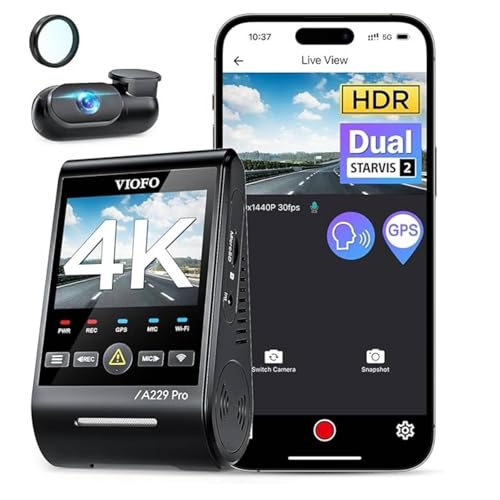
Viofo is the enthusiast's pick. The A229 class — 4K front, 2K rear on the Pro variants — leans on Sony STARVIS 2 sensors, buffered parking modes, and a firmware culture that ships meaningful updates long after purchase. Viofo owners talk about their cameras the way keyboard people talk about switches: CPL filters, bitrate settings, firmware changelogs. The image quality ceiling is slightly higher, and the community documentation is the best in the category. We covered the flagship in our Viofo A229 Pro review.
Image quality: Viofo by a nose, with caveats
Both brands put genuinely good sensors up front. In daylight, footage from a current Vantrue or Viofo flagship is functionally interchangeable — plates are legible at sane distances, colors are believable, and both handle harsh backlight acceptably.
Night is where owners report separation. Viofo's STARVIS 2 implementations tend to hold plate legibility a little better against headlight bloom and streetlight flare, which is the single scenario where dash cam footage most often wins or loses an insurance argument. It is not a landslide — Vantrue's night footage is solid, and our Garmin vs Viofo night comparison shows how much scene conditions matter regardless of brand — but if you force a ranking on pure image quality, Viofo edges it.
The caveat: image quality differences between these two brands are smaller than the difference a $20 CPL filter makes on either. Windshield reflections wash out more footage than sensor choice ever will. Vantrue sells a slim 40mm CPL that fixes this for around $20 — add the Vantrue CPL filter if you go that route, and Viofo has equivalents for its own lens housings.
Three-channel coverage: Vantrue, clearly
If you need front + cabin + rear — the rideshare configuration — Vantrue is the more purpose-built choice. The interior cameras in its N-series use infrared LEDs that produce usable cabin footage in total darkness, the field of view is tuned for a car interior rather than adapted from a rear camera, and the whole system is designed around the assumption that the cabin channel matters as much as the road.
Viofo builds three-channel systems too, and they are good, but the brand's center of gravity is front + rear image quality with the interior channel as an option. Owner threads consistently frame it the same way: Uber and Lyft drivers default to Vantrue, image-quality obsessives default to Viofo.
If you only need front + rear, this section is a tie and you should weight the other categories — or start with our multi-channel picks in the best dash cams roundup.
Parking mode and hardwiring
Both brands do parking surveillance properly, and both require a hardwire kit to do it right — cigarette-lighter power dies with the ignition on most cars. Viofo's buffered parking mode gets particular praise: the camera holds a rolling pre-event buffer, so the recording starts seconds before the impact or motion that triggered it rather than after. Vantrue's parking implementations (motion detection, low-bitrate continuous, collision wake) are comparably capable, with owners mostly reporting differences in configuration style rather than outcome.
Two practical notes that apply to either brand. First, use each maker's matched hardwire kit or a quality universal one with low-voltage cutoff — a proper hardwire kit runs about $30 and protects your car battery from being drained flat. Second, parking mode is the feature most sensitive to installation quality; our hardwiring and parking mode guide walks the full setup.
Apps, firmware, and living with them
Viofo's app and firmware cadence are the enthusiast benchmark: frequent updates, documented changelogs, and settings depth (bitrate control, exposure tweaks per channel) that Vantrue doesn't fully match. Vantrue counters with more physical controls on the device itself, which some drivers prefer — adjusting a setting at a red light via buttons beats pairing a phone.
Wi-Fi clip transfer works on both; both are occasionally fiddly, as is true of every dash cam brand. Neither requires a subscription for core function, which increasingly needs saying in 2026.
Accessories and ecosystem
Both brands sell CPL filters, hardwire kits, and mounts. Viofo's ecosystem is slightly deeper on the tinkerer end (external Bluetooth remotes, microphone options on some models), while Vantrue's is more turnkey. Neither locks you into proprietary storage — standard high-endurance microSD is the rule for both, and both are picky enough about cards that you should buy endurance-rated rather than whatever is cheapest.
Spec snapshot
| Vantrue (N-series 3-channel class) | Viofo (A229 class) | |
|---|---|---|
| Front camera | 4K-class, Sony sensor | 4K, Sony STARVIS 2 |
| Rear/second channel | 1080p rear or IR cabin | 2K rear (Pro trims) |
| Third channel | IR interior, rideshare-tuned | Optional interior |
| Parking mode | Motion / low-bitrate / collision wake | Buffered, pre-event capture |
| Power | Supercapacitor | Supercapacitor |
| Control style | On-device buttons + app | App-first, deep settings |
| Firmware culture | Stable, less frequent | Frequent, documented |
| Typical street price | Lower for comparable channels | Higher, flagship trims |
Read the table with one caveat: model generations shift specs inside each brand's lineup, so verify the exact trim you are buying — both brands sell multiple configurations under similar names, and the second channel (rear versus cabin) is the spec most often misread at checkout.
Warranty and support
Both brands run standard one-year warranties with responsive-enough email support, and both have active official presences in the owner communities where troubleshooting actually happens. Viofo's community depth is a genuine support asset: most configuration questions are already answered in a searchable thread. Vantrue skews toward more traditional support tickets. Neither brand has the retail service network of a Garmin, which is part of how both underprice it — worth knowing if you value walk-in support over spec sheets.
Price and value
Street prices move, but the shape holds: comparable three-channel Vantrue systems tend to land slightly below comparable Viofo Pro configurations — think roughly $190 for a strong Vantrue multi-channel setup versus roughly $280 for Viofo's top A229 Pro trim. That gap buys Viofo's better night ceiling and firmware culture; whether that is worth it depends entirely on whether you are the kind of owner who updates firmware.
Check current Vantrue multi-channel pricing and current Viofo pricing — both brands discount regularly, and a sale price should shift a close call.
Verdict: match the brand to the driver
- Rideshare drivers, delivery drivers, anyone who needs the cabin recorded: Vantrue. The infrared interior camera and purpose-built three-channel design are exactly the tool for the job.
- Image-quality enthusiasts, front+rear drivers, firmware tinkerers: Viofo. The night footage ceiling and update culture reward owners who care.
- Set-and-forget commuters who just want good footage: either — buy whichever configuration is on sale, add a CPL filter and a hardwire kit, and spend the savings on a good card.
For how these two stack against Garmin, Nextbase, and the budget field, our full comparison hub has the head-to-heads, and the current roundup ranks the whole market.
FAQ
Is Vantrue or Viofo better for Uber and Lyft drivers? Vantrue. Its N-series three-channel cameras pair the road-facing camera with an infrared interior camera designed for cabin footage in darkness — the configuration rideshare incidents actually require. Viofo can be configured for three channels, but Vantrue's lineup is built around that use case from the ground up.
Do Vantrue and Viofo dash cams need a subscription? No. Both brands record locally to a microSD card, and core features — recording, parking mode with a hardwire kit, app clip transfer — work without any recurring fee. That distinguishes them from several smart dash cam competitors that paywall cloud features.
Which brand has better night video? Owner consensus and sensor choices give Viofo a slight edge at night, especially for plate legibility against headlight glare on its STARVIS 2 models. The gap is modest, and a CPL filter plus correct mounting position affects night results on either brand more than the badge does.
Can I run a Vantrue or Viofo dash cam without hardwiring? Yes for normal driving — a cigarette-lighter or USB power source works fine while the ignition is on. Parking mode is the exception: continuous or buffered parking surveillance on both brands realistically requires a hardwire kit with low-voltage cutoff so the camera can draw power safely with the engine off.
No spam. Unsubscribe anytime.
Affiliate Disclosure